If you're homeschooling a first grader — or a first grader and a rising kindergartener at the same time — the hardest part usually isn't the work itself. It's the rhythm: what to do first, how long to sit, and what to do when one kid finishes and the other is still on question two.
Screens promise to solve that. Hand them a tablet and the lesson runs itself. But a lot of parents who try that find the same thing: the kid taps through it, remembers less of it, and the parent still can't see what was actually learned. Paper has the opposite problem — it takes a parent in the room. This post is about making that trade-off work in your favour, with a short, repeatable daily rhythm.
Start with the short plan, not the long day
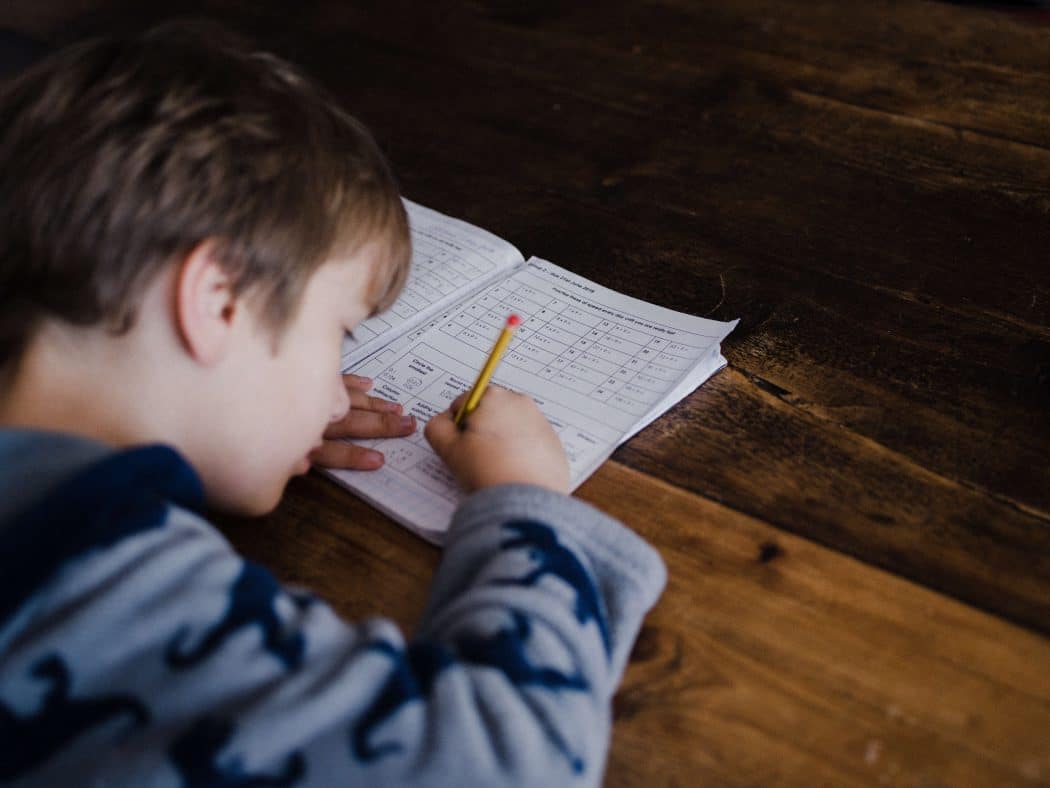
Little kids don't need a six-hour school day at home. They need a short plan they can finish, in the same order, every day. Something like:
- One page of reading or phonics — short, out loud, with you listening. This is the one to do first, while focus is freshest.
- One page of math — counting, number sense, simple addition for a first grader; matching, sorting, and number recognition for a kindergartener.
- One short writing or drawing task — a sentence, a copy-work line, a picture with a label. Keep it small enough to finish.
- Read-aloud together — you read, they listen. This counts as school, and it's often the part they remember best.
That's it for the core. Most families get through it in 60–90 minutes, split into two sittings if attention runs out. Everything after that — art, outside play, a library book, helping in the kitchen — is bonus, not a failed day if it doesn't happen.
Run two little ones on two levels, not one lesson
The mistake that burns parents out fastest is trying to teach a first grader and a kindergartener the same lesson at the same time. They aren't in the same place, and pretending they are means one is bored and the other is lost.
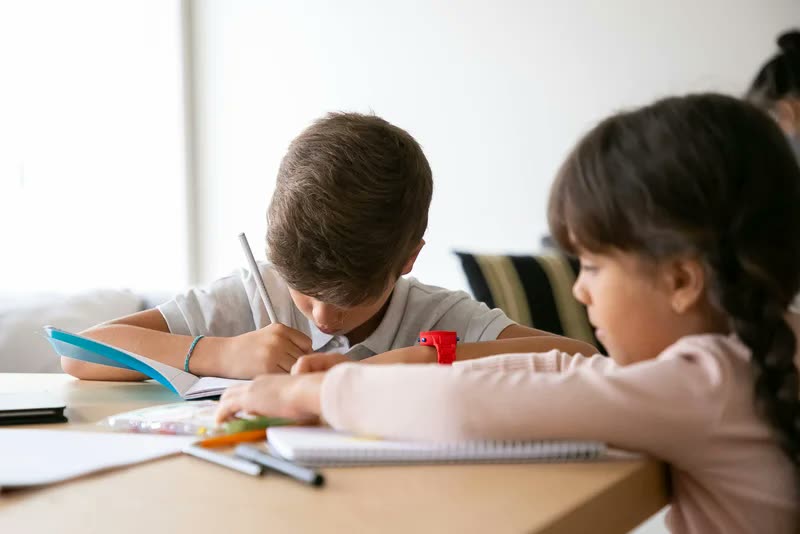
Instead, give each child their own level to work from, and stagger the starts:
- Start the older child on their independent page first — the one they can mostly do alone.
- While they work, sit with the younger child for their 10-minute direct lesson.
- Then swap: the younger child does a hands-on task (puzzles, blocks, drawing) while you check the older child's work and teach the next step.
You're not teaching two full lessons back to back. You're teaching one short lesson at a time, and the other child is always doing something real while they wait.
When a worksheet stalls, shrink it — don't switch to a screen
Every parent hits the page where the kid melts down. The instinct is to swap in a video or an app to get through it. Before you do, try shrinking the task instead:
- Cover half the page and do only the top half today.
- Do the first two problems together, then let them try the next two alone.
- Let them answer out loud while you write, if the writing itself is the hard part.
If the same kind of page stalls three days in a row, that's useful information, not failure: the level is probably off, not the child. A child working a step below where they struggle — and climbing from there — learns faster than a child pushed through pages they can't do yet. Teach at the level the child is actually at, in each subject separately. A kid can be ahead in math and behind in reading, and both of those can be true at once.
What a good week looks like
Not a perfect week — a good one:
- Four days of the short core plan, one day lighter or off.
- Reading out loud every day, even on the light day.
- One thing finished and shown to someone: a page on the fridge, a sentence read to a grandparent, a finished workbook chapter.
- A note to yourself on Friday: what clicked, what stalled, what to adjust next week.
That Friday note is the whole system. Homeschooling little kids isn't about finding the perfect curriculum on day one; it's about noticing quickly when a level is wrong and adjusting, week by week, before a small gap becomes a big one.
A note on what we're building
We're nearly done building Ahead of the Pack Learning, a K–8 curriculum built exactly this way: paper work, a short daily plan, and each subject taught at the child's real level, adjusted as they grow. We're putting together a free tester group for families who want to try it as it finishes — if that sounds like your family, reach out and we'll talk.